What the parents' results mean for the puppies
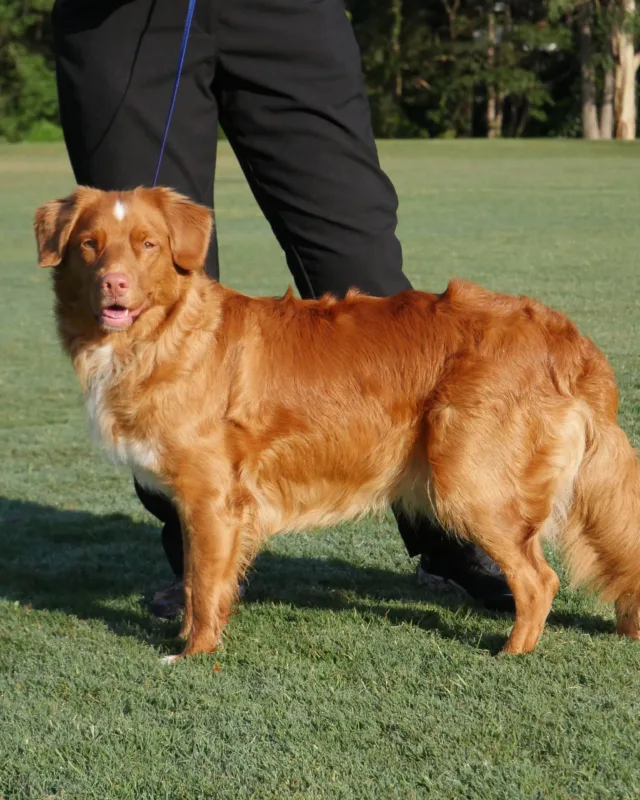
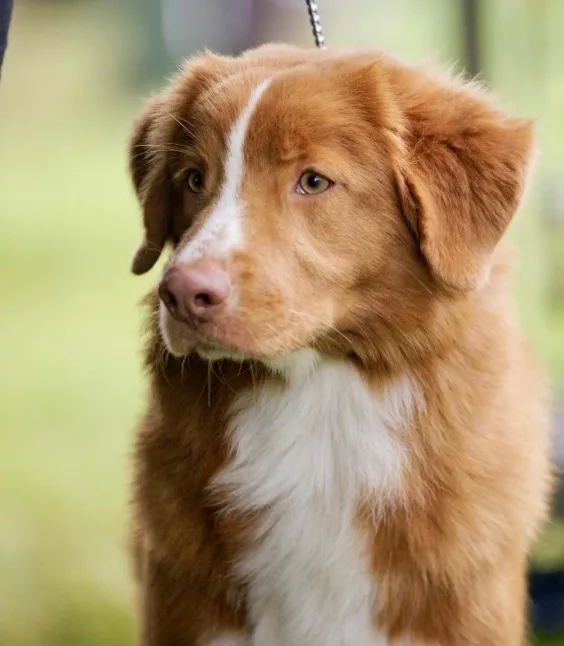
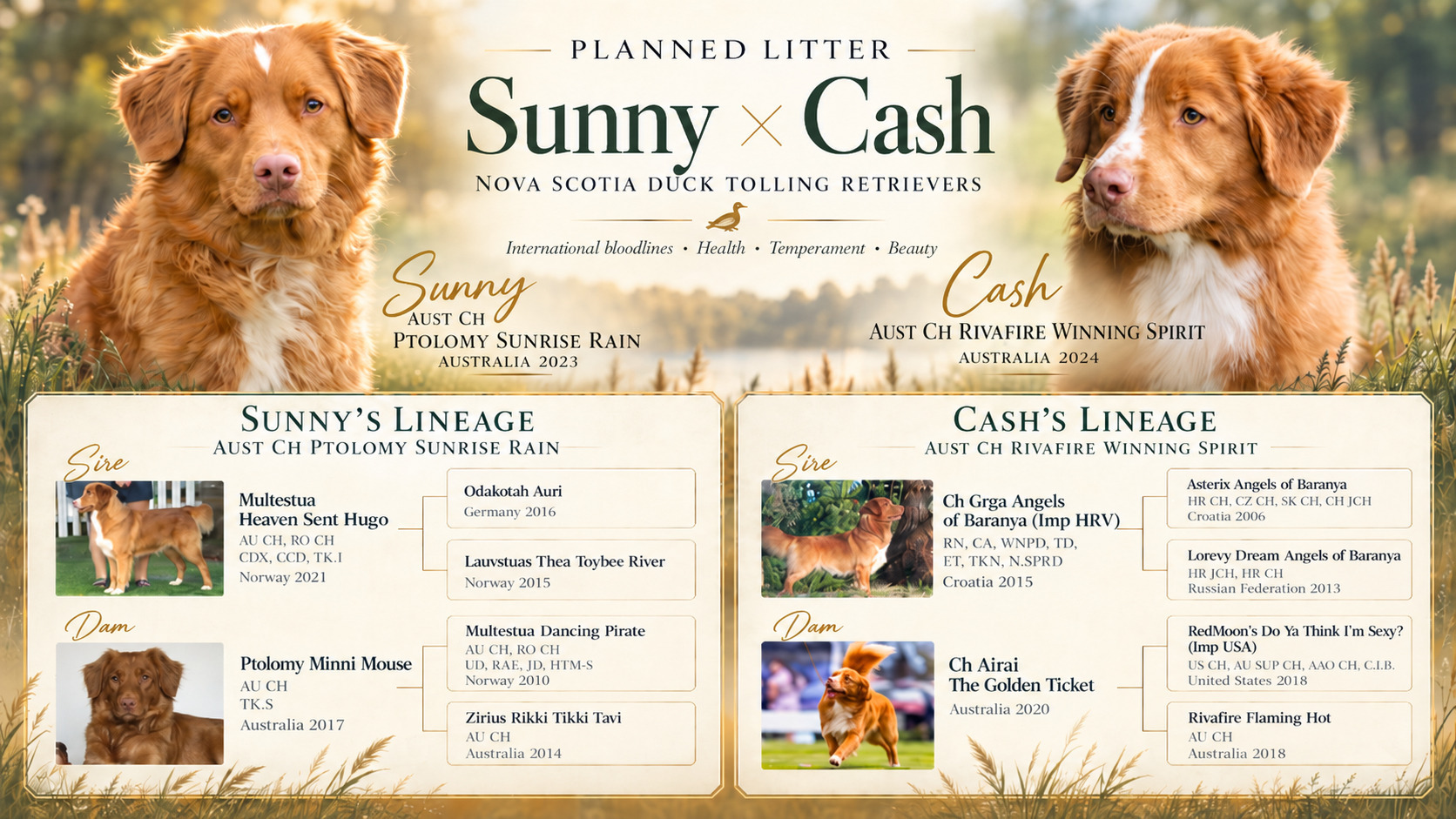
Sunny and Cash have both been DNA tested, and their results are shown on their profiles and in the parent cards above. Here is how their results combine for this litter.
Recessive conditions, including PRA
Every puppy inherits two copies of each gene: one from its mother and one from its father. With a recessive condition, a puppy is only affected if it inherits a copy of the variant from both parents. A dog with one copy is a carrier: it is not affected, but it can pass the copy on.
Cash is a carrier of prcd-PRA (progressive retinal atrophy, an inherited eye condition) and of Dilute. Sunny is clear of both. Because Sunny can only pass on normal copies, no puppy in this litter can be affected by prcd-PRA, and no puppy will be dilute, although some puppies may be carriers of either. For the other recessive conditions on the parents' profiles, at least one parent is clear, so the same applies.
CDDY is different
With CDDY, a single copy is associated with a higher risk of intervertebral disc disease (IVDD), which affects the discs of the spine. Not every dog with a copy of CDDY develops IVDD, but the risk is higher. CDDY is common in Tollers.
Sunny has one copy (N/CDDY) and Cash has none (N/N). Each puppy will inherit either Sunny's CDDY copy or her normal copy, and a normal copy from Cash. So no puppy can inherit two copies of CDDY, and on average about half the puppies will inherit none, and the others one copy, like Sunny.
Because CDDY is so common in Tollers, ruling out every dog that carries it would dangerously narrow the breed's gene pool. Instead, responsible breeders pair a dog with one copy (N/CDDY) with a clear dog (N/N). No puppy can then inherit two copies, and over several generations, as clear dogs are chosen for breeding, CDDY gradually becomes less common.
These are averages
The proportions above are averages. Each puppy's inheritance is a separate chance, a bit like tossing a coin, so in a single litter the actual numbers can be higher or lower.